
E-bikes, AI, and learning to embrace the assist
The bike is my way of escaping, my route to adventure. My work shows my strategic strength and my creativity. So leaning into artificial assistance, whether from a motor or an algorithm, felt like it went against all of those things.
Don’t get me wrong, I could see their worth, and I have seen extraordinary feats achieved with e-bikes and AI, but before I would adopt them, I needed to reframe how I thought.
There’s a famous quote from Joanna Maciejewska: “I want AI to do my laundry and dishes so that I can do art and writing, not for AI to do my art and writing so that I can do my laundry and dishes.”
The problem is, no one shows you how clean their dishes are. Everyone talks about the very public face of AI and e-bikes: the amazing artwork created in minutes, the monumental climb conquered, but all of the behind-the-scenes work goes unnoticed.
I had to silence the noise, focus on how I wanted to harness these tools (tools being the keyword), and ignore the perception that generative AI meant end product and e-bike meant replacing “analogue” rides. Once I managed that, I unlocked something and became a believer in both.
So, how am I using the power of AI as a content designer?
Primarily, I am freeing up my time by using it for the resource-heavy work:
1. Creating tone and style guides for existing sites.
To do this manually, I would have to assess a lot of pages or risk analyzing the few pages that are off-brand. AI can look at every page of a website.
2. Editorial content checks.
I’m a strong advocate of not being your own final proofreader. We all have our quirks and grammatical mistakes that are baked in, or guidelines to follow that might not match our personal style. Often, we simply don’t have another person who can check our work. AI can be that additional resource.
3. High-level accessibility checks.
Think of this as a quick kick of the tyres when looking at a used car. It won’t tell you everything that’s wrong, but it will find the major and obvious faults and let you know if a deeper inspection is needed.
4. Content gap analysis and funnel assessment.
AI is great at assessing content against predefined parameters. If given a list of defined content types (format, topics, length, etc.), it can easily scan and tell you the ratio of content you have and report it back to you in a simple graph, so at a quick glance, you can see if your content is hitting your targets.
5. Visualising competitive research.
Instead of synthesising your competitive analysis into a deck, you can drop that summary into AI and create fully working prototypes to act as a visual representation and inspiration.
My AI tools of choice?

Fuel IX — Easy co-pilot creation.
Built by TELUS, the company I work for, Fuel has very easy copilot creation. This is great for quickly spinning up content-checking tools to verify conversational flows and ensure chatbot content is on brand.
ChatGPT — Web search.
Having the ability to use a web search tool and access current content, rather than dealing with a predefined knowledge cutoff, allows for great website analysis, audits, and assessments.
Google NotebookLM — Synthesising content.
Being able to make your content work harder as a content designer is a great asset. I’ve used NotebookLM to create snack-sized versions of meal-sized content, for example, turning an hour-long presentation into a 15-minute podcast.
Figma Make — Visual mock-ups and functional UI interfaces.
Gone are my crude sketches or time-consuming Figma mockups. Now I can articulate my thoughts and give creative direction visually and quickly, which is ideal when dealing with visual people (including myself).
If AI has freed up time at work, then e-bikes have given me more time to live!
How have e-bikes become part of my day-to-day?
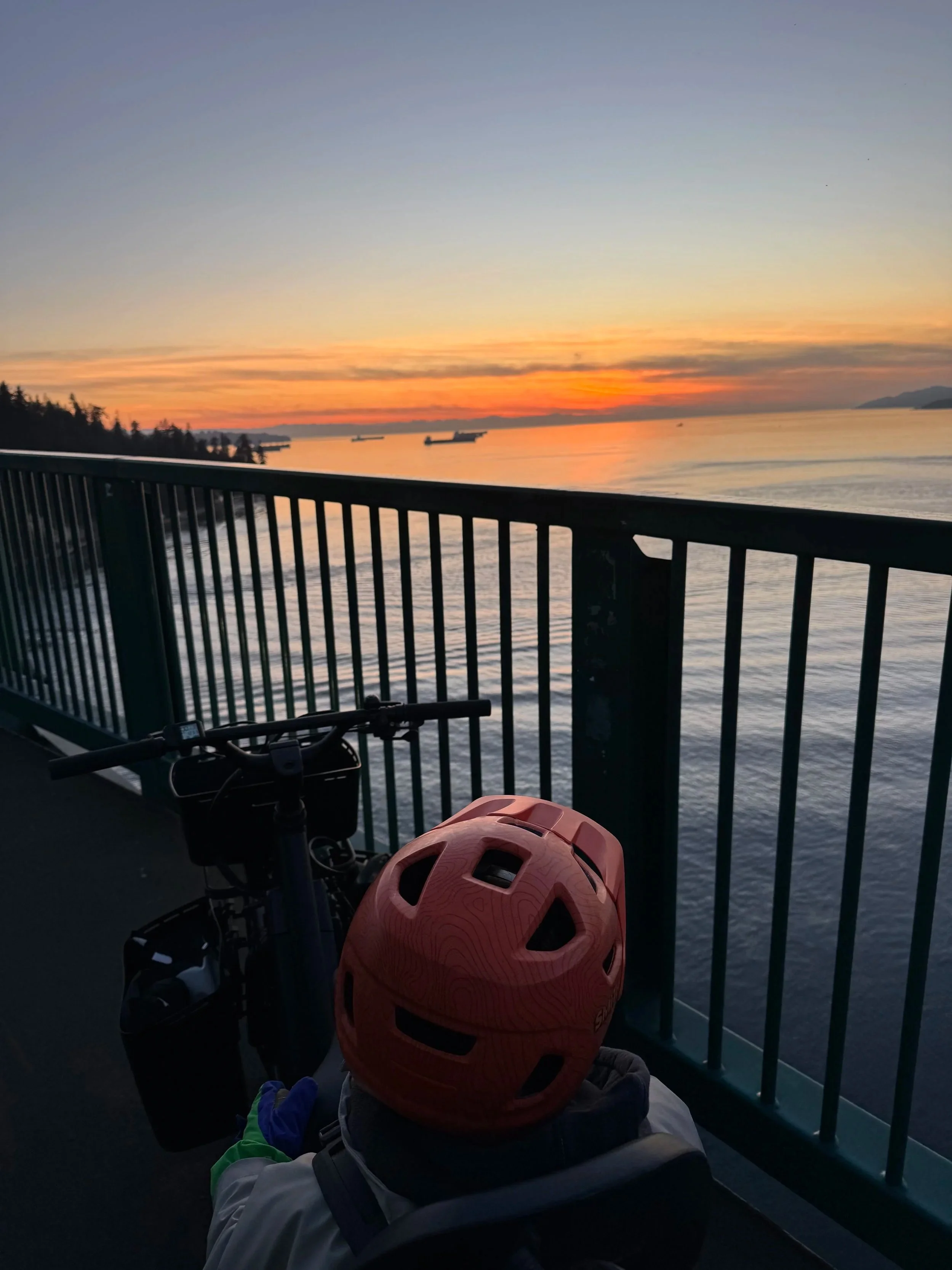
Stopping to enjoy a sunset on the e-bike.
As long as the weather is willing and it’s not too cold for my passenger, they have become a replacement for car journeys, not a replacement for bike rides.
1. Daycare pickup.
Traffic in Vancouver can be a pain; daycare spots are few and far between. When you combine these two things, you get a great recipe for after-work stress and needlessly long evenings. Luckily for me, the cycling infrastructure in Vancouver is pretty good. A car journey to and from daycare can take between 20–30 mins there and up to 1.5 hours back. The same journey by bike is about 20 minutes each way and all on safe and protected bike lanes. Plus, it’s a lot more fun!
2. Trips to the beach.
My ebike of choice is a cargo bike, which means I have plenty of storage for swim gear, picnic supplies, and anything else you might need to enjoy some time on the sand. My son can join me on the bike, my wife can enjoy a cargo-less ride on hers, and we don’t have to fight for a parking space.
3. Shopping trips.
Similar to the trips to the beach: quick and easy access, no problems searching for parking, and no traffic. I don’t use the bike for big trips, but I have done a small weekly food shop, pet supplies, and a few bottles of wine!
My e-bike of choice.
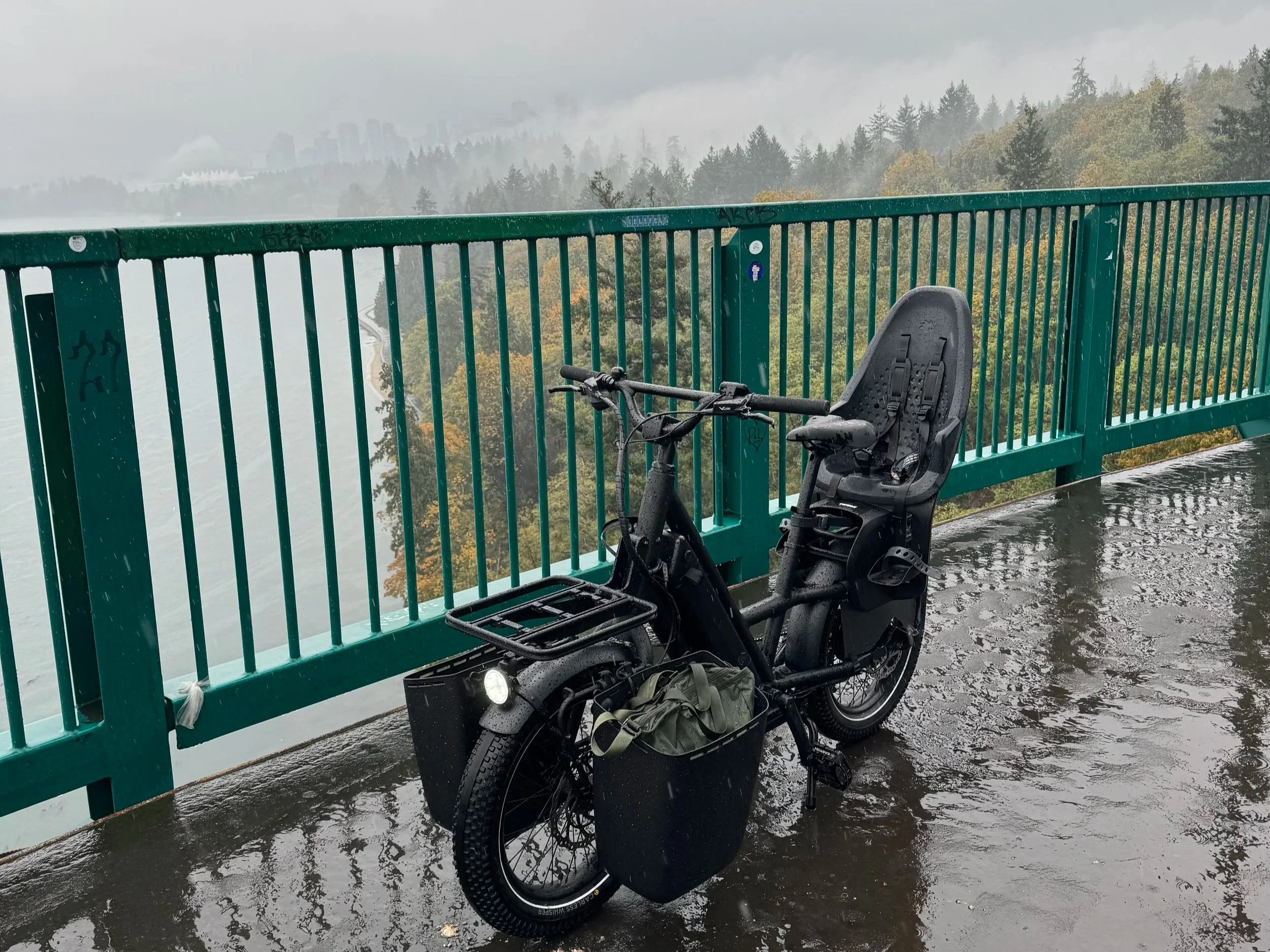
Like AI, e-bike adventures don’t always go to plan!
Specialized Haul ST — Replacing car journeys.
With up to 60 miles of battery range, ample storage, and the ability to carry a passenger up to 135lbs, the car is barely used for trips around 10 miles each way (once the temperatures hit double digits).
So what are my takeaways?
Don’t look at these things as answers or solutions, and definitely don’t look at them as replacements; instead, think about how they can free you up.
I’m doing my best to reduce executional work and spend more time on creative or strategic endeavors, identifying moments that don’t bring joy, and either removing them or finding a more enjoyable way to do them.
Replacing gridlocked car journeys to and from daycare with a spin on the e-bike, where my son and I look out for wolves, bears, or aliens in the woods, beats watching for tailgaters and manic bus drivers.
And if I’ve used AI at work, then I may have freed up enough time to take the scenic way home!